Past trainings and events
October 2017
20, Urania Berlin, Geo.X Career Day 2017,
The Career Day addresses all young researchers in the Geo.X partner programs who would like to gain insight into ways of balancing work and life in scientific careers. In the first part, ten speakers will share their personal experiences and strategies in an open space format. The participants will be invited to join the discussion on topics such as effective time management, coping with mobility requirements, combining research work and family and work-life balance outside of academia. In the afternoon, a plenary discussion with experts and decision makers from science policy and research funding will tackle the topic on a more general level.Career development within geoscience training networks often emphasizes open conversations about the realities of scientific careers. Young researchers benefit from hearing how others navigate the balance between demanding research schedules and personal lives, because these discussions reveal that time management and well-being are skills to be cultivated alongside scientific expertise. Open-space formats invite participants to shape the dialogue around the questions they find most urgent, encouraging transparency over rehearsed advice.
Mobility is a defining feature of international research training, yet it brings logistical and emotional considerations that are rarely addressed in formal coursework. Early-career scientists often weigh the benefits of cross-border collaboration against family commitments, visa requirements, and the search for stable routines. Conversations with experienced researchers can illuminate practical strategies, such as planning visits around life events or building supportive networks in host cities to ease transitions.
Plenary discussions bring together voices from research funding bodies, policy institutions, and academic leadership to reflect on the structures shaping scientific careers. These conversations can highlight how policy decisions influence working conditions, funding stability, and the recognition of diverse career paths within and beyond academia. Participants gain insight into the broader system in which their work is embedded, fostering a sense of agency when engaging with decision makers about future research environments.
For trainees preparing for careers in earth sciences and hazard-related fields, such events complement technical training by addressing the human dimensions of scientific work. Integrating career development into research programs signals that institutions value researchers as whole individuals, not only as producers of data or publications. This holistic approach can strengthen retention in the discipline and encourage thoughtful, reflective leadership in monitoring, risk communication, and applied geosciences.
You can find the program and further information here: http://www.geo-x.net/career-day-2017/or here: http://irtg-strategy.de/en/node/191/The participation is free of charge . The number of participants is limited to 10 per program (in this case StRATEGy) and 100 altogether. First come first served.Please register online by September 1, 2017 : http://www.geo-x.net/career-day-2017/ . Please note : you will receive the binding confirmation of your participation in the beginning of September 2017, after the closing of the registration process.Free childcare will be provided upon request. If you would like to use this service, please indicate it in the registration form. You will receive further information on the service after registering.
September 2017
06 - 08, Comenius University Bratislava, ITN-ALErT Final Meeting, Link to the Agenda Link to the participants
November 2016
21 - 22, University of Potsdam, Workshop "Science Communication" , Link to the agenda
July 2016
11, University of Potsdam, Lecture Prof. Faccenna,
Lecture "Mountain building and mantle dynamics"
University of Potsdam, Campus Golm, House 27; 16:15 o'clock; room 0.01
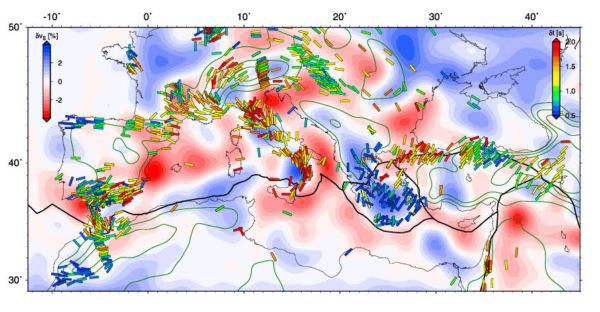
Claudio Faccenna is a professor of University Rome Tre, Italy. His research background is on structural geology, numerical modeling and seismic data interpretation. He has been working in the Mediterranean, but also in South America investigating shallow deformation signatures over subduction zones. His expertise is highly valuable for the ITN research group – particularly for the interpretation of tectonic stress along the NAP and SAP boundaries.
September 2015
17 - 18, Paris, Mid-term review meeting
June 2015
01, Ankara, B2 course (Field-based video, Part 2), link to the report, PDF 440 kB
May 2015
27 - 31, Turkey, Fieldschool III and course B2,
link to the report, PDF 671 kB
26, Istanbul, B2 course (Field-based video, Part 1)
23 - 25, Istanbul, Turkey, Module A 4 "Neotectonics"
15 - 22, Athen, Greece, Module C 5 "Active faults",
link to the report, PDF 561 kB